


1. Introduction
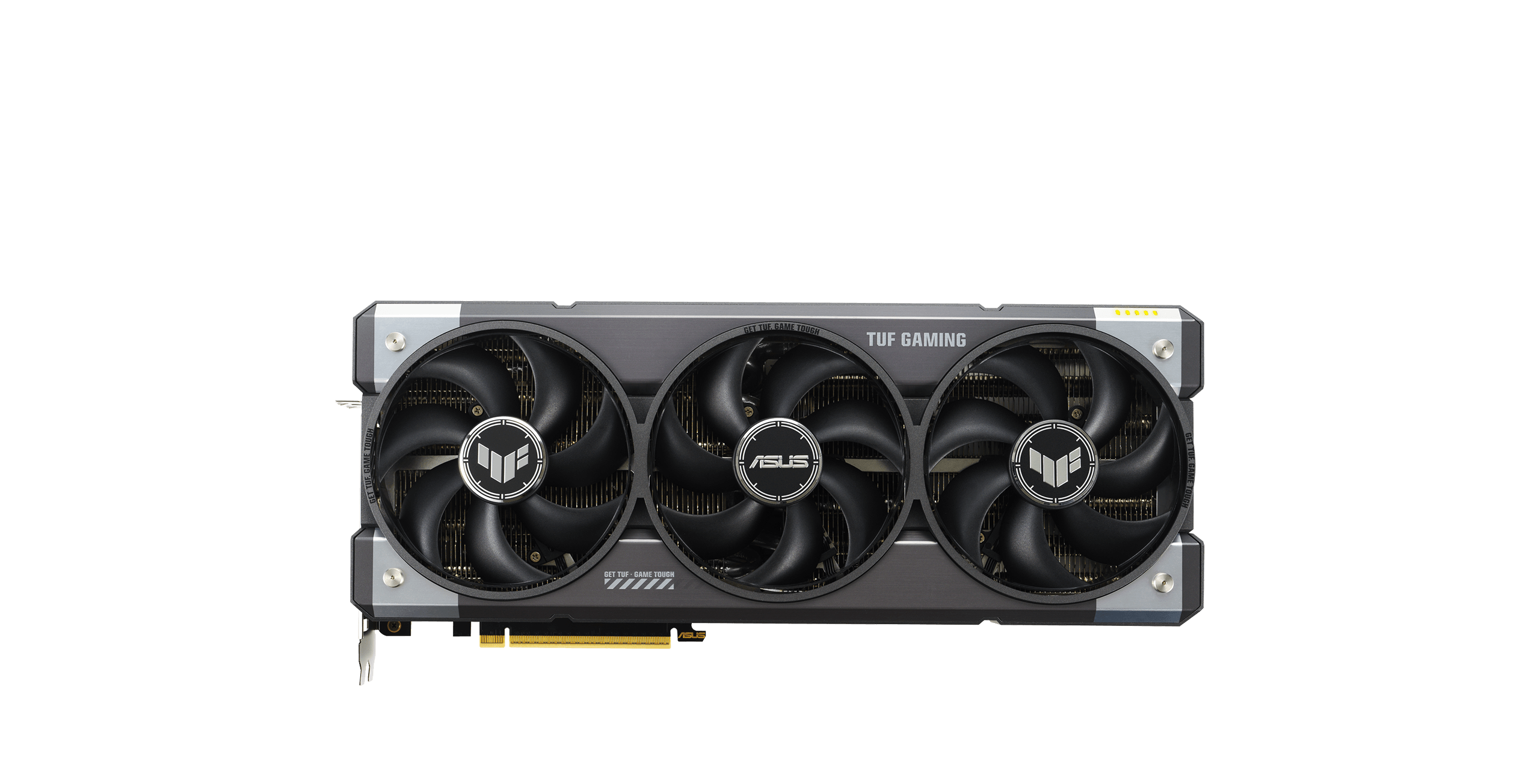
Gamers, creators and PC enthusiasts constantly seek graphics cards that deliver cutting-edge performance, future-proofed architecture and robust build quality. The ASUS TUF Gaming GeForce RTX 5080 16GB GDDR7 OC Edition checks every box—bringing the new NVIDIA Blackwell architecture, 16 GB of ultra-fast GDDR7 memory, PCIe 5.0 support, and ASUS’s hallmark durable “TUF” engineering. Whether you’re chasing 4K gaming, ray tracing, AI-enhanced workflows or streaming/editing creativity, this card is built for it. Key specs: 10,752 CUDA cores, 30 Gbps memory speed on a 256-bit bus, triple-fan MaxContact + vapor chamber cooling. Asus+3B&H Photo Video+3Asus+3
Throughout this review we’ll dive into its technical foundation, build quality, real-world performance, installation considerations, target users and whether it’s worth your upgrade.
Table of Contents
2. Technical Specifications at a Glance
| Spec | Value |
|---|---|
| GPU Engine | NVIDIA GeForce RTX 5080 (Blackwell architecture) NVIDIA |
| CUDA Cores | 10,752 Asus+1 |
| Memory | 16 GB GDDR7, 30 Gbps speed B&H Photo Video+1 |
| Memory Interface | 256-bit Asus+1 |
| Interface | PCIe 5.0 x16 Asus+1 |
| Outputs | 2 × HDMI 2.1b + 3 × DisplayPort 2.1b Micro Center+1 |
| Boost Clock (OC edition) | ~2.64 GHz (varies by model) Asus+1 |
| Slot Width / Cooling | 3.6-slot design with large vapor chamber & triple-fan cooling Asus+1 |
| Recommended PSU | 850 W or higher (varies, depending on system) Asus |
These specs place the TUF RTX 5080 firmly at the high end of the desktop GPU market, making it ideal for 4K gaming, advanced ray tracing, creation workflows and VR.
3. Build Quality & Cooling Innovation
One thing ASUS emphasises heavily with the TUF Gaming series is durability—and the RTX 5080 model shows it. We find features such as:
- Military-grade components: TUF-certified chokes, MOSFETs and capacitors designed for extended lifespan and tolerance to temperature fluctuations, humidity, vibration and salt-fog. Asus+1
- Protective PCB coating: A conformal coating over the board helps guard against moisture and dust, improving reliability in harsher environments. Asus
- MaxContact heat spreader & vapor chamber: ASUS claims improved thermal contact surface area combined with a low-profile yet high-capacity vapor chamber to keep thermals in check. Asus+1
- Axial-tech triple fans: The design reportedly pushes up to 23% more airflow over standard fans and uses dual-ball bearings for enhanced longevity (~80 k hours). Asus
- Dual BIOS (Quiet / Performance mode): Switch-unlock different performance modes depending on your scenario—silent mode for light workloads, performance mode for gaming-heavy load. Asus
All of these combine to give the card not only high performance, but also a build that is designed to last and operate quietly under load. This is especially important when systems are under sustained gaming or creative workloads.
4. Architecture & Feature Highlights
At the heart of the card is NVIDIA’s Blackwell architecture and the GeForce RTX 50-series platform. Key highlights:
- Fourth-gen Ray Tracing Cores + Fifth-gen Tensor Cores: Enabling advanced ray tracing, AI-accelerated features such as DLSS 4 (Multi-Frame Generation) and broader creator workloads. Asus
- GDDR7 Memory & PCIe 5.0: Making this card future-proof for next-gen motherboards and workloads that benefit from high memory bandwidth and interface speed. NVIDIA+1
- AI Performance (TOPs rating): ASUS specifies “1858 AI TOPs” for this model, indicating substantial AI compute potential for creative or AI-enhanced workflows. Asus
In practical terms, this architecture means the card is not just for gaming today—but also for creative professionals editing 4K/8K video, doing real-time rendering, or even running AI-assisted design workflows.
5. Performance in Gaming & Creative Workflows
When using a GPU such as this, the key questions are: how much more performance do you get, and is it worth the premium?
Gaming
With its 10,752 CUDA cores, 16 GB GDDR7 and full ray tracing support, the TUF RTX 5080 is designed to drive ultra-settings at 4K resolution smoothly. Early leaks and reviews of RTX 50-series products show substantial gains over previous generations. For example, benchmarking game titles on RTX 5080 vs RTX 5070 Ti show 200+ FPS at 1600p with DLSS x4 enabled. Tom’s Guide
Creative Workflows
For creators working in 3D, AI or video editing:
- The large memory frame (16 GB) and wide memory bus help in 4K editing, animation, Blender, Maya or Cinema 4D. B&H Photo Video
- The AI TOPs rating and support for Studio Drivers make it well-suited for content creation as well as gaming.
Real-world considerations
With great performance comes high requirements: you’ll need a properly ventilated case, a robust PSU (850 W+ recommended), and you should check system compatibility for size (the card measures ~348 mm length and is triple-slot width). Asus
6. Who Should Buy This Card?
This card makes sense for:
- Gamers targeting 4K and 1440p at ultra/high FPS with ray tracing enabled
- Creative professionals working in 3D modelling, video editing, AI design workflows
- Enthusiasts who want a durable, long-life GPU with future-proof architecture
- PC builders who prioritise quiet cooling, premium build quality and longevity
If your needs are more modest (1080p gaming, casual content creation), you might find better value in a lower tier GPU.
7. Installation & Compatibility Considerations
Before installing the TUF RTX 5080, check the following:
- Case size: At approx 348 mm length and occupying ~3.6 slots, ensure your chassis has clearance. Accelerator
- Power supply: Recommended PSU is around 850 W or higher; one 16-pin connector is used. Asus+1
- Motherboard support: Use PCIe 5.0 x16 slot for full benefit—though it is backward compatible with PCIe 4.0.
- Cooling: Ensure good airflow around the card; large vapor chamber and triple fans need space and ventilation.
- Driver install: Use the ASUS GPU Tweak III utility and keep drivers up to date via GeForce Game Ready or Studio Drivers. Asus
8. Pros & Cons
Pros
- Top-tier performance for gaming and creation
- 16 GB GDDR7 memory ensures future-proofing
- Premium cooling and build quality for durability
- Supports latest features: Ray Tracing, DLSS 4, PCIe 5.0, DisplayPort 2.1b
Cons - High cost—expect premium pricing
- Large size may not fit compact cases
- Requires strong PSU and good airflow
- Diminishing returns if you game at 1080p or modest settings
9. Final Thoughts
The ASUS TUF Gaming GeForce RTX 5080 16GB GDDR7 OC Edition is an excellent choice for gamers or creators who demand the best today and want longevity for tomorrow. Its combination of high performance, advanced architecture, and durable build makes it a standout in the current GPU market.
If your budget and setup allow, this card will keep you well covered for the next generation of games and creative workflows. Just ensure your case, PSU and motherboard are ready.
10. Frequently Asked Questions (FAQ)
Q1: Is this card worth it over RTX 40-series?
A: If you’re gaming at 4K or doing creative content work, yes—the newer architecture, memory and features provide tangible benefits. For 1080p or casual users the gains may be less dramatic.
Q2: Can I use this with PCIe 4.0?
A: Yes — the card is backward compatible; you’ll just not utilise the full bandwidth of PCIe 5.0, which might slightly limit future-proofing.
Q3: Will my current PSU work?
A: Check its wattage, age, rails specification and connectors—850 W or more is recommended for this card under load.
Q4: How noisy is it?
A: With the vapor chamber and axial-tech triple fans, ASUS claims quiet operation and efficient cooling. Actual noise depends on case airflow and load.
Q5: How long will it stay relevant?
A: Given the 16 GB GDDR7 and Blackwell architecture, you’re looking at several years of high-end performance before needing to upgrade.